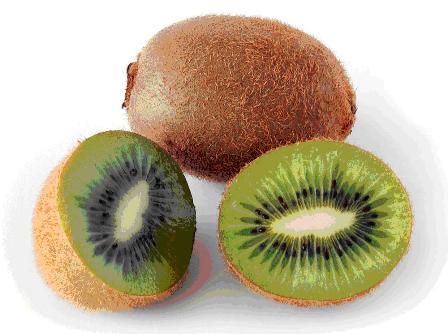
Kiwi fruit can and should be eaten whole. The skin increases tartness and offers additional vitamins, minerals and fiber. If you desire something less tart; cut the kiwi in half and eat as you would a passion fruit scooping out the flesh; or peel and slice it like a pineapple.
Vitamins, Minerals and Phytochemical Components
Talk about a fruit packing a punch in taste and vitamins. Kiwi fruit is a rich source of vitamin C and is high in potassium. By comparison it’s content is less than a banana’s, but you’d eat more anyway. It also contains vitamins A and E. The skin is a good source of flavonoid antioxidants as well. Didn’t I say to eat the skin?
The kiwi fruit seed oil contains on average 62% alpha-linolenic acid, an omega-3 fatty acid. More than 90% of the fruit is made up of water, so it only has 90 calories per serving. A 5-oz. serving of kiwifruit averages over 450 mg of potassium, beating out the banana and the orange.
It also has about 230% of the RDA for vitamin C and has approximately 10% of the RDA for folic acid and vitamin E.

No comments:
Post a Comment