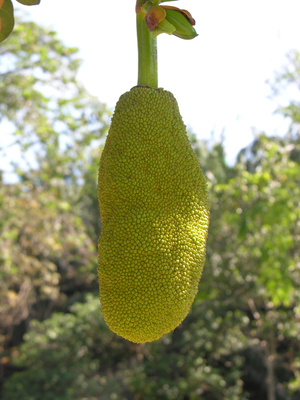
Jackfruit, cultivated in China, India, Africa and the Philippines, grows in semi-tropical and tropical climates. Whether you are a southern gardener with a jackfruit tree or have access to the fruit in your supermarket, consider adding more of the nutrient-rich fruit to your diet. The pulp can be cooked for a vegetable-like side dish, while the large seeds are comparable to chestnuts. One cup of the pulp is equal to a serving of 165 grams.
Vitamin A
One serving of jackfruit pulp contributes about 10 percent of the recommended daily amount of vitamin A. Vitamin A is crucial to eyesight, proper cell production and fetal development in pregnant women. The nutrient, also known as retinol, helps boost immunity and keeps skin and bones healthy. According to the University of Maryland Medical Center (UMMC), other foods considered high in vitamin A include orange and yellow vegetables, dark green vegetables, and animal products like liver, eggs and milk.
Vitamin C
A cup of jackfruit will provide you with about 18 percent of your daily vitamin C needs. Ascorbic acid, also known as vitamin C, provides the body with antioxidant protection. Researchers link antioxidants with protecting the body from aging and from diseases, including cancer and heart disease. Vitamin C also helps to build collagen, which strengthens bones and keeps skin healthy and more youthful-looking. UMMC recommends smokers take in extra amounts of vitamin C--about 35 mg more than the normal recommended amount--because smoking robs the body of the nutrient. Other foods containing the vitamin include citrus fruits and juices, green peppers, strawberries and broccoli.
Vitamin B1
Vitamin B1, also known as thiamine, boosts the immune system and helps people control their stress levels, according to UMMC. B vitamins, as a group, help the body convert food into energy. Studies indicate that vitamin B1 may also help fight cataracts, beriberi and dementia. Jackfruit pulp contributes about .05 mg of the nutrient per serving. Recommended daily intakes range from .5 mg for children to 1.5 for breastfeeding women, notes UMMC. According to Purdue University, the fresh seeds are "good sources of vitamins B1 and B2." Pork and organ meats are high in B1, as are molasses, brewer's yeast and fortified cereals.
Vitamin B3
Vitamin B3, or niacin, also helps to turn food into energy. B3 works to lower cholesterol, to promote healthy circulation and to keep the body's hormones working properly, especially those related to sex and stress. Jackfruit pulp yields about .66 mg niacin per serving. Recommended daily amounts range from 6 mg for young children to 17-18 mg for pregnant and nursing females. Other foods high in niacin include beets, organ meats, seafood, sunflower seeds and brewer's yeast.

No comments:
Post a Comment